
 Click to see larger image
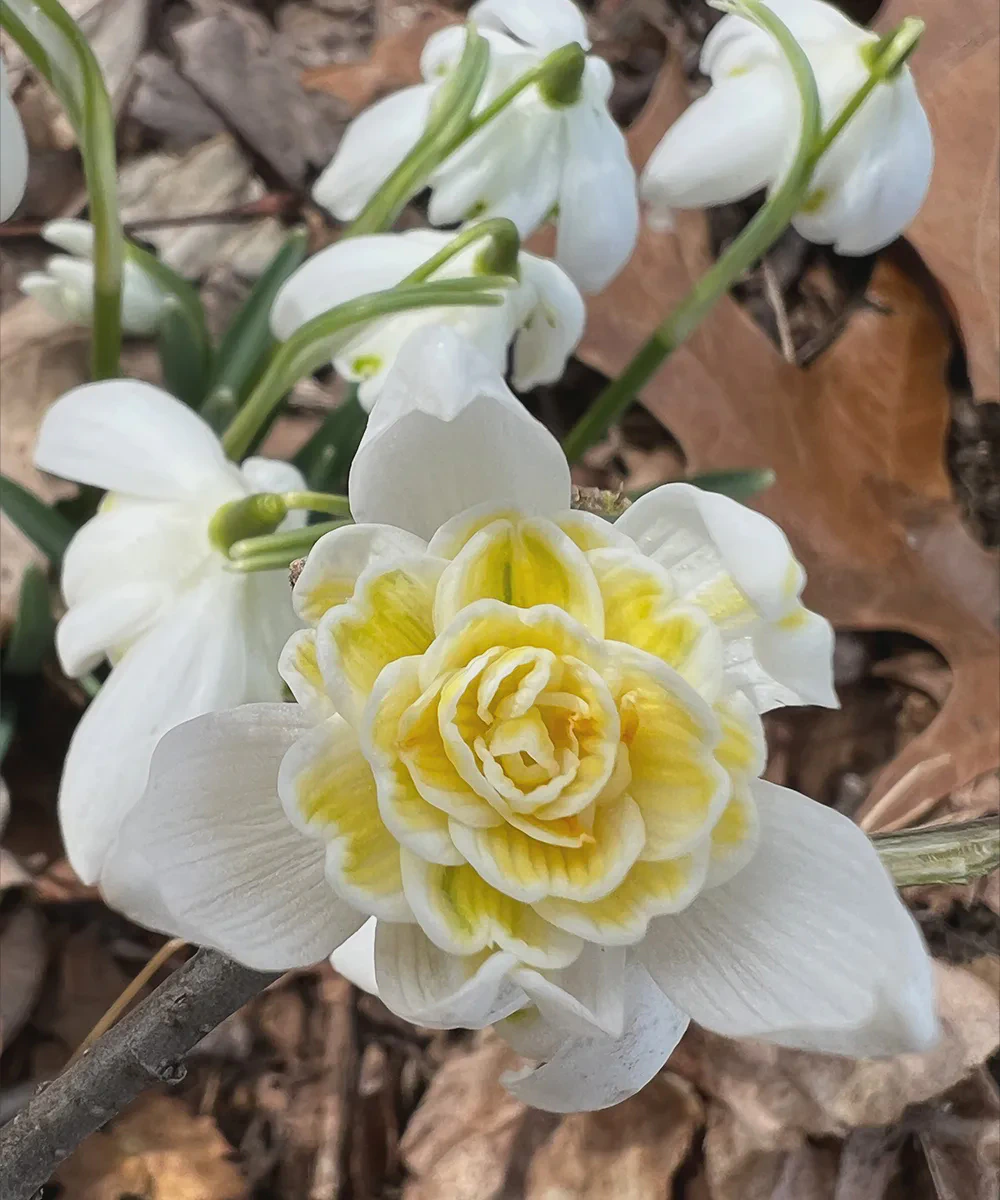
Lady Elphinstone
Plant Details
- Distinguishing Characteristic: Double yellow-marked flower
- Bloom Time: March
- Mature Height: Medium
- Species: G. nivalis Origin Story:
This unique double yellow-flowered snowdrop was discovered growing in the grass at Heawood Hall in 1890 by Sir Graeme Elphinstone which he was renting at the time, in Cheshire, UK. What a great find!
Mine have always turned out yellow but the markings may remain greenish yellow depending on site and soil acidity, but no-one knows exactly why. It is a slow but steady grower forming beautiful clumps of nodding flowers which show up well from a distance. Perfect for the fairy garden!
This bulb is currently unavailable.
Please Contact us to learn more.
From the grower:
This unique double yellow-marked snowdrop was discovered growing in the grass at Heawood Hall in 1890 by Sir Graeme Elphinstone which he was renting at the time, in Cheshire, England. What a great find! It is formally known as Galanthus nivalis forma pleniflorus ‘Lady Elphinstone’. It had been passed to Samuel Arnott and was circulating among collectors as far back as his era.
Mine have always turned out yellow, but when first planting, they may turn up more greenish until settling in. Soil acidity and sunlight may also be factors, which remain proven. It is a slow but steady grower forming beautiful clumps of nodding flowers which show up well from a distance. I have not tried growing it in grass but it would be a good choice to experiment with, given the grass is not too vigorous.
It carries an Royal Horticultural Society Award of Garden Merit and is rarely offered by nurseries. Given its dumpling-like nodding flowers, it would be perfect for the fairy garden!